
Starcrossed
StarcrossedLifestyle
4.867.00 Reviews
- Version
- 1.0.40
- Installs
- 50.00K
- Age Rating
- Everyone
Screenshots
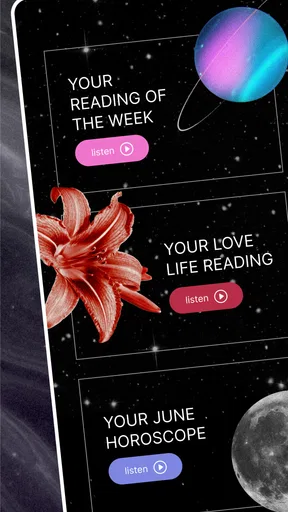
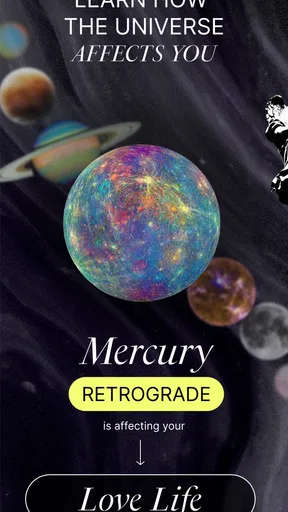
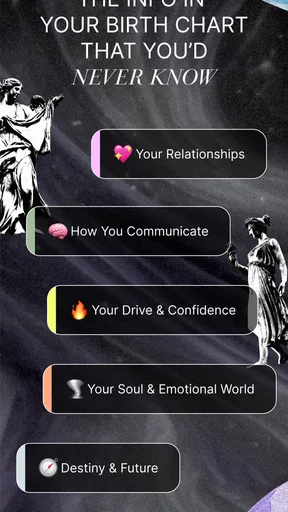
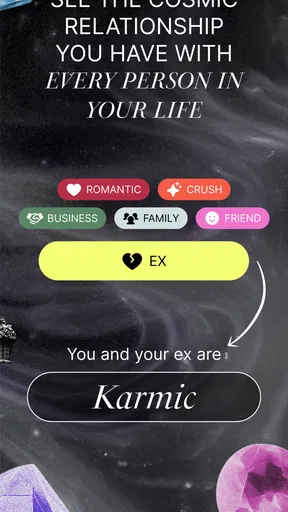
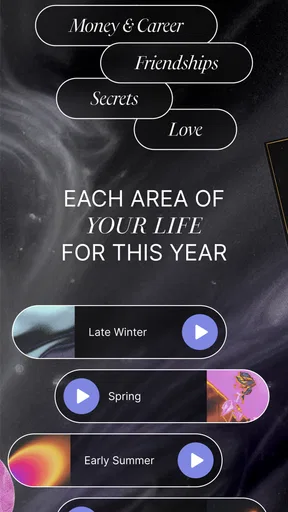

Our Review of Starcrossed
 Analysis by Appyee
I opened Starcrossed expecting a quick horoscope-style experience, but its focus is more practical: it brings a birth chart, current planetary movements, and relationship compatibility into one lifestyle app. I found that combination useful because it gives me a way to move from a general question—“Why does this period feel different?”—to something more structured that I can actually reflect on. It is not a replacement for professional guidance or a scientific tool, but it can be an engaging companion for people who already enjoy astrology and want more context than a short daily message.
Developed by Starcrossed, the app is free to start and is suitable for Everyone. It had a 4.8 average from around 2.8 thousand ratings when I reviewed it, with more than 50 thousand installs. Those figures suggest that it has found a clear audience, although popularity alone does not tell me whether it will suit every astrology beginner. The important question is how well its workflow fits the way you want to use a chart.
From a vague question to a usable chart
The best way to approach Starcrossed is to begin with a specific intention rather than tapping through every screen at random. I might want to understand my usual personality patterns, look at the tone of the current day, or compare my chart with someone close to me. Each goal needs slightly different information, and the app becomes more useful when I treat those as separate steps instead of expecting one screen to explain everything.
The starting point is the birth chart. This is the foundation for the rest of the experience, so accuracy matters more here than speed. I would enter my birth details carefully, checking the date and time before moving on. A small mistake at this stage can affect the interpretation and make later compatibility or transit readings less meaningful. That is a practical habit worth adopting with any astrology app, but it matters especially when several features depend on the same starting chart.
Once the chart is available, I can use it as a reference rather than reading every interpretation in one sitting. The chart can feel dense if I am new to astrology, with several symbols and concepts competing for attention. I found it more manageable to choose one area—such as a prominent placement or a relationship question—and then return later. This turns the app from a wall of information into a personal notebook for gradual discovery.
A useful, non-obvious approach is to keep the birth chart and the daily view mentally separate. The birth chart describes the personal framework Starcrossed is using, while daily transits are about the changing sky in relation to that framework. If I mix those two layers together, I can easily treat a temporary influence as a permanent personality trait. Reading the chart first, then checking the daily movement, gives me a clearer handoff between the stable information and the changing information.
Reading daily transits without overreacting
The daily transit feature is where the app can become part of a routine. Rather than opening it only when something goes wrong, I would check it at a consistent moment, perhaps while planning the day or winding down in the evening. The value is not in treating every transit as a prediction. I get more from using it as a prompt: should I slow down before replying to a difficult message, make space for creative work, or notice a recurring emotional reaction?
That approach also protects against one of the common weaknesses of astrology apps: dramatic interpretations can encourage users to blame every inconvenience on the planets. I prefer to compare the transit reading with what is actually happening in my schedule. If the app suggests a reflective mood but I have a busy workday, I can use that as a reminder to leave breathing room rather than assuming the day is destined to fail.
Starcrossed works best when the reading leads to a small, observable action. I might write down one intention, postpone an unnecessary argument, or reserve time to review a decision. The app itself does not need to make the decision for me. Its role is to provide a lens, and the quality of the result depends on whether I use that lens thoughtfully.
Moving from self-reflection to compatibility
Compatibility is the next handoff in the workflow. Instead of looking only at my individual chart, I can use the app to explore how two people’s information may interact. This is appealing for couples, friends, and anyone curious about communication patterns, but it is also the point where I would be most careful with conclusions. A compatibility reading can suggest themes to discuss; it should not become a verdict about whether a relationship is healthy or worth continuing.
For a realistic everyday scenario, imagine that I have had the same disagreement with a partner several times. I could review my own chart, look at the current transit context, and then compare compatibility information. The useful outcome would not be “the app says we are incompatible.” A better outcome would be identifying a topic to discuss calmly: how each person handles pressure, how direct communication feels, or why one person needs more time before responding.
This is one of the app’s strongest practical uses because it turns an abstract feature into a conversation starter. The handoff from chart to compatibility can help me ask better questions, but it cannot replace listening to the other person. If someone uses the result to label a partner or excuse hurtful behavior, the feature has been taken too far.
What to do with the result
After reviewing a chart, a transit, or a compatibility reading, I like to finish with a short written takeaway. It could be a sentence about a habit I want to observe, a question for a conversation, or a reminder not to make a rushed assumption. This is a simple workflow improvement, but it prevents the familiar problem of reading an interesting interpretation and forgetting it immediately.
I would also compare repeated themes over time rather than treating one reading as definitive. If the same kind of prompt keeps appearing and it matches experiences I am already noticing, it may be useful for self-reflection. If it feels completely disconnected, I would set it aside instead of forcing a meaning. That flexibility is important: the app is more helpful as a reflective tool than as an authority.
The most useful outcome is a clearer question, not a fixed prediction. That distinction shapes whether Starcrossed feels thoughtful or superficial. It also makes the app easier to recommend to a friend, because I can suggest a healthy way to use it without promising certainty.
Where the workflow feels smooth—and where it breaks
The main strength is the way the app connects three related activities. I can begin with personal background, move into current timing, and then consider a relationship. That sequence feels more coherent than using one app for a birth chart, another for daily transits, and a third for compatibility. Keeping the journey together reduces the need to copy information between services and makes it easier to revisit the same context.
The trade-off is that a connected workflow can also make the experience feel more demanding. A newcomer may not know which part to read first or how much importance to give each interpretation. I would have preferred to approach it with a narrow goal and resist the temptation to explore every available angle at once. The app rewards patience more than rapid tapping.
Another friction point is the difference between curiosity and commitment. The free entry point makes it easy to try the core idea, but in-app purchases range from $6.99 to $107.99 per item. That is a wide range, so I would inspect the purchase screen carefully before agreeing to anything and decide in advance how much I am comfortable spending. Someone who only wants an occasional chart may find the free starting point sufficient, while a frequent user may be tempted to pay for more access than they originally planned.
The app’s current version is 1.0.40, which indicates that it is still a relatively young product compared with long-established astrology platforms. I noticed that this matters less for the basic concept than for expectations around polish and depth. Users who want a huge library of established interpretations, extensive customization, or a mature desktop ecosystem may prefer a more established alternative. Starcrossed is more appealing to someone who values a focused mobile workflow and does not need astrology to become a full research project.
Its minimum operating requirement is Android 7.0, so many older Android phones can potentially run it. That is helpful for accessibility, but compatibility with an operating system does not guarantee the same comfort on every device. A smaller screen can make chart symbols and longer explanations less pleasant to examine, and I would rather use a larger display when I want to compare several ideas carefully.
There is also a conceptual limitation that no interface can solve. Birth-chart interpretations depend on the quality of the information entered and on how the user understands astrological language. If I do not know the difference between a natal placement and a transit, the app can provide content without automatically providing understanding. I would recommend taking notes on unfamiliar terms and checking them against the surrounding interpretation instead of searching for a single sentence that explains everything.
Who should use it, and who should skip it
I think Starcrossed is a good fit for someone who wants more than a generic daily horoscope but still prefers a guided mobile experience. It suits reflective users who enjoy looking for patterns, couples who want a gentle conversation prompt, and beginners willing to learn a few basic concepts while exploring their own chart. The combination of personal chart information, current transits, and compatibility gives those users a clear path from self-understanding to everyday reflection.
I would skip it if I need evidence-based psychological assessment, relationship counseling, or firm predictions about important decisions. I would also look elsewhere if my priority is advanced chart analysis with highly technical controls. A traditional astrology reference or a specialist service may be better for someone who already knows exactly what they want to calculate and does not need a guided lifestyle presentation.
It is also not the right choice for someone who tends to become anxious about predictive language. Even a mild reading can feel powerful when I am already worried. In that situation, I would use the app only as an optional journaling prompt—or avoid it altogether—and rely on direct planning, trusted conversations, or professional support instead.
My recommendation after using the complete flow
I would recommend Starcrossed to a friend with one condition: use it actively, not passively. Enter the birth information carefully, learn the chart in small pieces, check daily transits as prompts rather than commands, and use compatibility readings to open conversations instead of closing them. That workflow makes the app feel personal without handing it control over my choices.
The free starting point lowers the barrier to trying it, while the paid items mean I would keep an eye on spending if I became a regular user. The Everyone rating makes it broadly approachable, but age suitability does not remove the need for emotional judgment when readings touch relationships or difficult periods.
Overall, Starcrossed is a focused lifestyle app with a clear path from personal information to daily context and relationship reflection. Its strongest result is not a prediction; it is the moment when a reading helps me pause, notice a pattern, and choose a more deliberate response. If that is how you want to use astrology on your phone, I think it is worth exploring. If you want technical depth, scientific certainty, or professional advice, a different tool will serve you better.
Verdict
Strengths of Starcrossed
- Beautiful hand-drawn art creates a distinctive visual identity.
- Choice-driven conversations make each playthrough feel personal.
- Romantic routes offer varied character personalities and dynamics.
- The story is easy to follow and suits relaxed gaming sessions.
- Works well for players who enjoy narrative-focused games over action.
Limitations of Starcrossed
- Some scenes may feel slow for players seeking frequent gameplay.
- Romance options can be limited compared with larger visual novels.
- Certain choices have subtle effects that are hard to notice immediately.
- The emotional tone may not appeal to players avoiding dramatic stories.
- Replay value depends heavily on how much you enjoy revisiting dialogue.
Similar Picks in This Category
View All
SmartThings
Samsung Electronics Co., Ltd.4.6

Google Home
Google LLC4.0

Pinterest4.2

Astrotalk - Talk to Astrologer
Astrology & Horoscope4.7

My Verizon
Verizon Consumer Group4.5

Samsung Wallet (Samsung Pay)
Samsung Electronics Co., Ltd.4.1
Frequently Asked Questions
What is Starcrossed, and what kind of experience does it offer?
Starcrossed is a story-focused mobile game centered on romance, character relationships, and interactive choices. Players follow the main narrative, meet different characters, and make decisions that can influence conversations, emotional developments, and possible outcomes. It is best suited to users who enjoy visual-novel-style storytelling rather than fast action, competitive gameplay, or complex traditional game mechanics.
Is Starcrossed free to download and play?
Starcrossed may be available as a free download, but the complete experience can depend on the version offered through your device’s app store. Some content may be unlocked through optional purchases, premium choices, or additional episodes. Before installing, check the current store listing for pricing, in-app purchase details, supported regions, and whether the download includes the full story or only an introductory portion.
Does Starcrossed require an internet connection?
The internet requirements can vary depending on how Starcrossed delivers its story, media, updates, and optional purchases. Basic gameplay may work offline after the necessary files have been installed, but an internet connection could still be needed for the first download, account features, advertisements, cloud saving, or new content. It is recommended to launch the game online at least once before relying on offline access.
Is Starcrossed suitable for children and younger players?
Parents should review Starcrossed’s official age rating and store description before allowing younger players to download it. Because the game focuses on relationships and romantic storytelling, it may include mature themes, suggestive dialogue, emotional situations, or content that is not appropriate for all ages. Device-level parental controls are useful if you want to restrict purchases or limit access to mature material.
What should I check before downloading Starcrossed on Android or iOS?
Before downloading Starcrossed, verify that your phone or tablet meets the listed operating-system requirements and has enough free storage for the application and any additional story files. Also check the developer name, recent user reviews, privacy information, permissions, purchase model, and whether your device supports the current version. These details can help prevent compatibility problems and unexpected costs after installation.
